
PLACE GUIDE · park
Seoul Forest
How can you keep a Seoul Forest day useful when one facility, program, or route detail is uncertain?
Seongsu · Seoul
- Address
- 273 Ttukseom-ro, Seongdong-gu, Seoul.Source: Visit Seoul · Seoul Forest · VISITKOREA · Seoul Forest
- General access
- The stored official information separates the general public park from facility-specific schedules, closures, programs, and conditions.Source: Seoul Metropolitan Government · Seoul Forest · Seoul Forest Conservancy · Park Information
- Arrival choice
- Use Seoul Forest Station for a direct park approach; Ttukseom Station is another approach into the wider park area and may fit the rest of the day better.Source: Visit Seoul · Seoul Forest · VISITKOREA · Five Ways to Enjoy Seoul Forest
- Fallback rule
- Choose one open-park base and keep the specific facility or program as an optional branch until its current condition is confirmed.Source: VISITKOREA · Five Ways to Enjoy Seoul Forest · Seoul Forest Conservancy · Park Information
- CHANGE RISK
- high
- VERIFICATION
- Recheck current park notices, facility hours, closures, programs, event layers, weather-sensitive conditions, and route signage before visiting.
GOOD WAYS IN
- park first fallback
- facility optional visit
- open path reset
- park to Seongsu continuation
The stored sources support a flexible planning frame and documented place context, not a guaranteed open facility, quiet route, wildlife sighting, event installation, or current condition. Last checked 2026-08-12. Source: Seoul Metropolitan Government · Seoul Forest · Seoul Forest Conservancy · Park Information · Visit Seoul · Seoul Forest · VISITKOREA · Seoul Forest · VISITKOREA · Five Ways to Enjoy Seoul Forest
GOOGLE MAPS
Open Seoul Forest in Google Maps
Seoul Forest, 273 Ttukseom-ro, Seongdong-gu, Seoul
Check the live pin and directions before you leave.
OPEN IN GOOGLE MAPS ↗Separate the three questions before you leave
A Seoul Forest plan becomes fragile when one sentence carries three different facts: whether the park is accessible, whether a particular facility or program is operating, and whether your group still wants that feature once you arrive. The stored official park information keeps those questions separate. That separation is the beginning of a good backup plan.
First, check the detail that made you choose the day. Is it a facility, a program, an event layer, or a particular route condition? Use the current official notice for that question. Second, keep the general park context in view. Seoul Forest is documented as a public park with connected open and ecological spaces, so a change in one branch does not automatically erase the whole visit. Third, decide what would count as enough for your group. A flexible plan needs an exit as much as it needs an entrance.
This is more useful than pretending every park visit can be reduced to one schedule. The official sources can tell you about the place and the conditions that need verification. They cannot tell you whether your energy, weather, or attention will make a longer branch worthwhile. Leave that part open on purpose.
Build the open park base first
Make the open park your first layer, not your consolation prize. Start with a broad path, an open space, or another legible section where the group can orient itself. The goal is not to claim a specific loop or exact duration that the stored evidence does not establish. The goal is to give everyone a usable first decision after arrival.
VISITKOREA's stored activity feature presents several ways to enjoy Seoul Forest. Read that as a menu of possible pace and mood, not a list you need to complete. If the group wants a short reset, keep the base small. If everyone still has energy, add the facility or program branch after the live check. If the original feature is unavailable, the open park remains the part of the plan that was never dependent on one operating detail.
The distinction matters because a public park can be generous without being predictable in every corner. A tree-lined path, open lawn, or water-facing area may be a useful setting for your day, but the sources do not prove that one area will be quiet, shaded, accessible in a particular way, or unchanged when you visit. Use the landscape as context and let the current notice decide the volatile part.
Choose the arrival that fits the rest of Seoul
The stored visitor records list Seoul Forest at 273 Ttukseom-ro, Seongdong-gu, Seoul, and describe more than one subway approach. Seoul Forest Station is the direct default when the park is the main event. Ttukseom Station can make sense when the rest of your route already brings you toward the wider park area. Neither needs to be treated as the universal answer.
Think about what comes before and after the park. If you want the day to begin with the most controllable version of the visit, use the park-first approach and decide on the optional branch once you are oriented. If Seongsu is already part of the plan, a different approach may reduce backtracking. The useful decision is not which entrance sounds most complete. It is which arrival leaves the most room to change your mind.
Keep the map focused on Seoul Forest rather than on a broad neighborhood label. The Google Maps link below is an arrival aid for the documented place address, not proof that a specific facility, path, installation, or entrance is open. Those details belong to the live check.
Keep free entry separate from changeable conditions
The dated price context is simple: the stored visitor information documents general Seoul Forest park entry as free. That makes a short visit or early exit easier to choose. It does not establish a price, reservation rule, or operating schedule for every facility, program, rental, or event layer, so this article does not invent one.
Treat free entry as flexibility, not as a promise that every feature is available. The official Seoul Forest and conservancy records distinguish the broad park from individual operating details. Before making one facility the reason for crossing the city, check the current notice for that facility. If the detail is unclear, keep it optional and use the open park as the base.
This also protects the reader from a common planning mistake: turning an old or general listing into a current itinerary. A dated check tells you what was reviewed. The caveat tells you what can still change. Together they give the guide a useful boundary without pretending the park is static.
KEEP THE PARK USEFUL
A base route and an optional branch
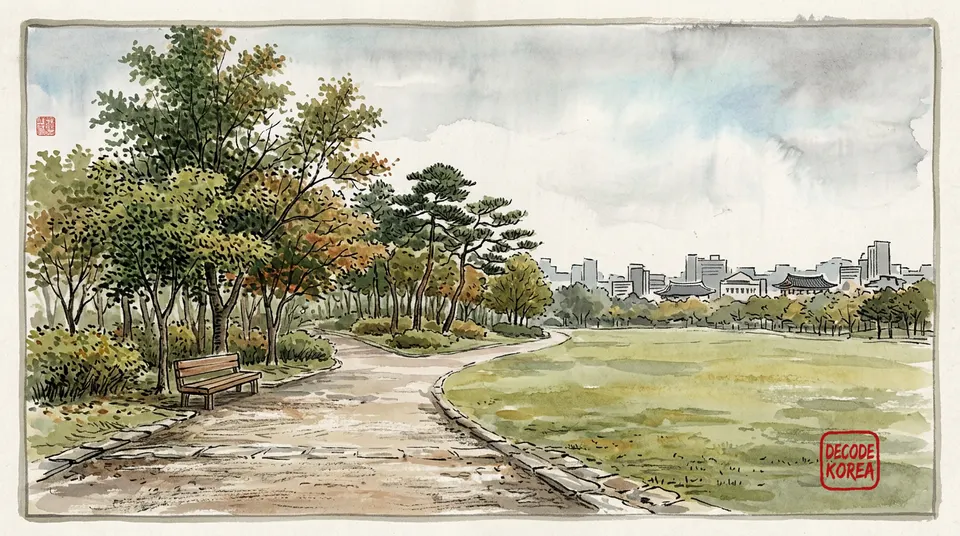
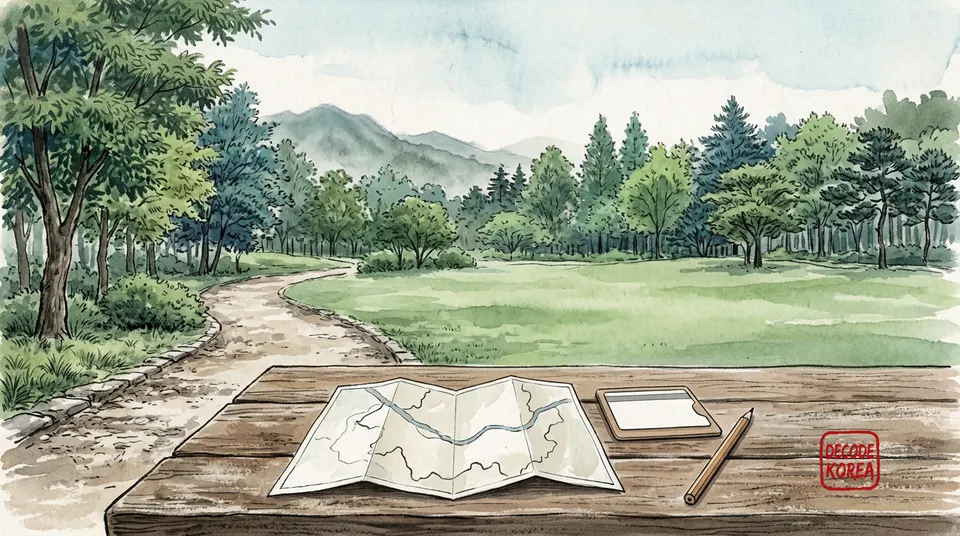
These original landscape paintings show the planning idea without pretending to document a current Seoul Forest visit or facility condition.
1 / 2
Source: Seoul Metropolitan Government · Seoul Forest · Seoul Forest Conservancy · Park Information · VISITKOREA · Five Ways to Enjoy Seoul Forest
Set the stopping point before the plan expands
A backup plan works best when it has a deliberate stopping point. For a short open-park visit, that may be the end of the first section that gives you the feeling you came for. For a facility-optional day, it may be the moment you learn that the branch is not worth the extra effort. For a park-to-Seongsu route, it may be the edge where continuing becomes a new neighborhood plan rather than part of the park visit.
Ask three questions before adding distance: Is the current detail confirmed? Does the group still want the same pace? Would continuing add a distinct experience, or only make the route longer? A no is enough reason to stop. The point of the fallback is to preserve the day, not to win an imaginary completeness contest.
VisitSeoul TV's English visual context can help you picture the relationship between Seongsu-dong and Seoul Forest, but it is not a current access map or a guarantee of weather, crowd level, route condition, or facility operation. Use it for orientation and mood. Use the official park and visitor pages for decisions that can change.
The most resilient Seoul Forest plan is therefore small: check the feature, arrive through the approach that fits the rest of your day, use the open park as the base, and keep one optional branch. If that branch works, it adds something. If it does not, the visit still has a shape.
 WATCH ON YOUTUBECinematic Seoul: Seongsu-dong and Seoul Forest
Open embedded player
Source: YouTube · VisitSeoul TV · Cinematic Seoul: Seongsu-dong and Seoul Forest