
PLACE GUIDE · park
Seoul Forest
Which Seoul Forest activity mode fits the time, energy, and pace of your day?
Seongsu · Seoul
- Address
- 273 Ttukseom-ro, Seongdong-gu, SeoulSource: Visit Seoul · Seoul Forest · VISITKOREA · Seoul Forest
- Arrival choice
- Use Seoul Forest Station for a direct park approach; Ttukseom Station is another approach into the surrounding park area.Source: Visit Seoul · Seoul Forest · VISITKOREA · Five Ways to Enjoy Seoul Forest
- General access
- The stored official information describes the general park as open 24 hours and general entry as free, while individual facilities and programs can follow separate schedules or conditions.Source: Seoul Metropolitan Government · Seoul Forest · Seoul Forest Conservancy · Park Information · VISITKOREA · Seoul Forest
- Activity check
- Confirm current facility hours, closures, programs, and any route-specific conditions before making one feature essential to the day.Source: Seoul Forest Conservancy · Park Information · VISITKOREA · Five Ways to Enjoy Seoul Forest
- CHANGE RISK
- high
- VERIFICATION
- Recheck current park notices, facility hours, closures, programs, weather-sensitive conditions, and route signage before visiting.
GOOD WAYS IN
- open path walk
- wetland and tree observation
- bike and lawn outing
- short flexible park visit
The stored sources support activity choices and general access context, not a guaranteed quiet route, wildlife sighting, facility schedule, or current condition. Last checked 2026-08-12. Source: Seoul Metropolitan Government · Seoul Forest · Seoul Forest Conservancy · Park Information · Visit Seoul · Seoul Forest · VISITKOREA · Seoul Forest · VISITKOREA · Five Ways to Enjoy Seoul Forest
GOOGLE MAPS
Open Seoul Forest in Google Maps
Seoul Forest, 273 Ttukseom-ro, Seongdong-gu, Seoul
Check the live pin and directions before you leave.
OPEN IN GOOGLE MAPS ↗Choose the kind of day before you choose the path
Seoul Forest is generous with possibilities, which is exactly why a visit can become harder to plan than expected. The stored VISITKOREA activity feature presents more than one way to enjoy the park, while the official park pages describe a collection of connected open and ecological spaces. Read that combination as permission to choose, not as a route you need to complete.
Start with the feeling you want. An open-path walk works when you want a flexible reset and do not need one feature to carry the visit. A wetland or tree-focused route works when you want to move more slowly and let the landscape become the activity. A longer bike-and-lawn outing works when the group has time and energy for a wider loop. These are planning frames, not guarantees about what you will see.
The useful rule is one main activity and one optional extension. That keeps the visit legible if the weather turns, a facility is closed, or the group loses interest halfway through. A large city park does not reward a perfect scorecard. It rewards a choice that leaves enough room to notice where you are.
Match the activity to your available energy
Choose the open walk when you want the lowest-commitment version of Seoul Forest. Use the park's broad paths and open space to orient yourself, then decide whether you want to continue. This mode is useful for a short visit, a first look before another Seoul plan, or a group that does not share one pace. Keep the destination small: one open section and a return point are enough.
Choose the wetland and tree observation mode when the point of the visit is to slow down. Water-facing paths, trees, and habitat edges can turn the park from a route between attractions into the thing you came to experience. Treat the stopping and looking as the activity. Do not promise a particular animal, a quiet park, or a fixed seasonal scene; those depend on conditions the stored sources cannot predict.
Choose the bike-and-lawn mode when you want a longer outing with room to spread out. A wider activity frame can work for a group with different energy levels, but it also needs a clear exit rule. Decide where you will regroup and what counts as enough before you begin. The longer option should make the day more spacious, not turn every extra path into a new obligation.
Let the rest of Seoul decide your arrival
Seoul Forest's stored visitor information lists 273 Ttukseom-ro, Seongdong-gu, Seoul, and identifies more than one subway approach. Seoul Forest Station is the clean default when the park is the main event. Ttukseom Station can make more sense when the rest of your day already brings you toward the wider neighborhood. The right choice is the one that cuts down on backtracking, not the one that wins an abstract entrance contest.
Once you arrive, orient yourself before committing to the optional branch. An open lawn or information point gives you a practical reset: you can see how the group is moving, decide whether the weather supports the plan, and choose whether the wetland, tree-lined path, or longer activity still fits. This small pause is more useful than carrying a detailed route that no longer matches the day.
If you are meeting someone, choose a return point that is easier to describe than a small trail junction. A broad open area or agreed exit makes the activity choice reversible. That matters in a large park because the best route for one person may be too long, too exposed, or too quiet for another.
Keep free entry separate from the live details
The price context is simple: the stored visitor information documents general Seoul Forest park entry as free. That lowers the commitment required to choose a short walk or leave early. It does not mean every garden, facility, program, or special activity has the same conditions. Keep the general admission fact in one box in your head and the live check for your chosen feature in another.
The official park and conservancy records also separate broad park access from individual operating details. A park can be open while a facility has different hours, a program has a separate condition, or an event layer changes the route. If one particular space is the reason you are traveling across Seoul, check its current notice before you build the whole day around it.
This distinction is what makes the activity picker useful. When the current detail is unclear, choose the open-path version and keep the feature optional. When the detail is confirmed, you can give the wetland, garden, or longer activity a more deliberate place in the plan. Free entry gives you flexibility; it does not replace verification.
CHOOSE YOUR PARK DAY
Three activity moods, one deliberate stopping point
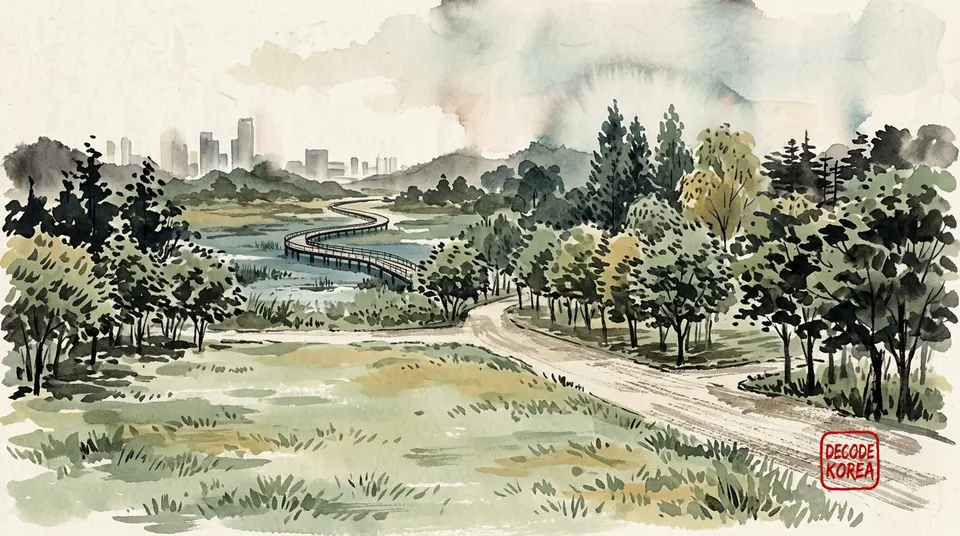
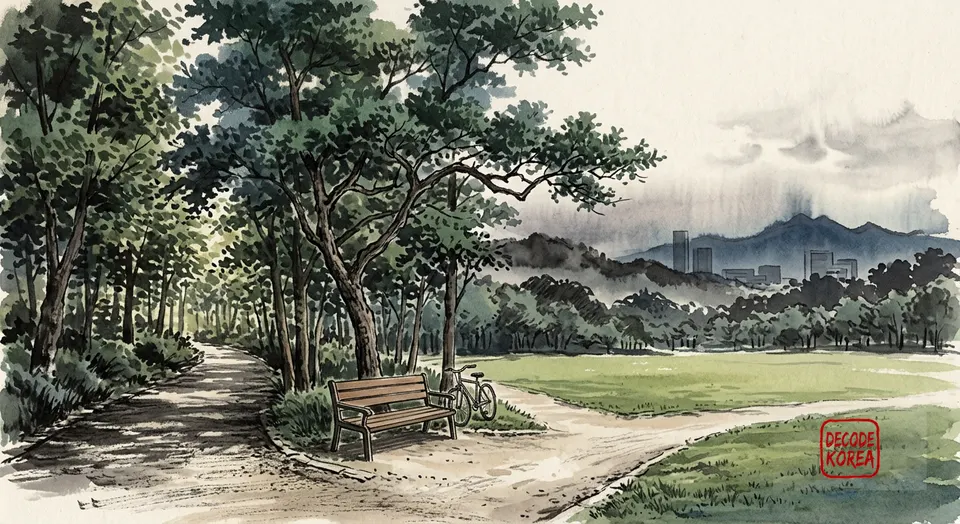
These original landscape paintings translate the activity choice into visual rhythm. They are route context, not documentary photographs of Seoul Forest or a current facility condition.
1 / 2
Source: VISITKOREA · Five Ways to Enjoy Seoul Forest · Seoul Metropolitan Government · Seoul Forest · Seoul Forest Conservancy · Park Information · Visit Seoul · Seoul Forest
Decide what counts as enough
Before you leave, name the stopping point. For the open walk, it might be the end of the first loop or the point where the park has given you the reset you wanted. For the wetland mode, it might be the end of the boardwalk or the place where looking has become more valuable than continuing. For the bike-and-lawn outing, it might be the agreed regroup point before anyone feels they need to keep exploring.
Use three questions at that moment: Does the group still want the same pace? Is the feature you planned to use open and reachable under current conditions? Would continuing add something, or only add distance? A no is not a failed visit. It is the information that lets you stop while the day still feels chosen.
An English VisitSeoul TV video supplies visual context for Seoul Forest and the surrounding Seongsu setting. Use it to picture the relationship between park and neighborhood, not to predict your exact route, crowd level, weather, or facility condition. The stored video is a useful mood reference; the official park and facility pages remain the source for decisions that can change.
Seoul Forest is easiest to remember when one detail becomes yours: the open lawn, the slower water edge, the shade, or the ability to turn back without losing the day. Pick the activity mode that fits your actual energy, keep one extension optional, and leave one path for a future visit.
 WATCH ON YOUTUBECinematic Seoul: Seongsu-dong and Seoul Forest
Open embedded player
Source: YouTube · VisitSeoul TV · Cinematic Seoul: Seongsu-dong and Seoul Forest