
PLACE GUIDE · park
Seoul Forest
How can you pair Seoul Forest with the 2026 Seoul International Garden Show and Seongsu without treating the connection as one fixed itinerary?
Seongsu · Seoul
- Address
- 273 Ttukseom-ro, Seongdong-gu, SeoulSource: Visit Seoul · Seoul Forest · VISITKOREA · Seoul Forest
- Starting point
- Use Seoul Forest Station for a direct park-first approach; Ttukseom Station is another route into the surrounding park area.Source: Visit Seoul · Seoul Forest · VISITKOREA · Five Ways to Enjoy Seoul Forest
- General access
- The park is open 24 hours and general entry is free in the stored visitor information, but individual spaces and programs can follow their own conditions.Source: Seoul Metropolitan Government · Seoul Forest · Seoul Forest Conservancy · Park Information · VISITKOREA · Seoul Forest
- Current program check
- Confirm the garden-show route, installations, closures, and any program-specific access details before visiting.Source: Seoul Metropolitan Government · 2026 Seoul International Garden Show · Seoul Forest Conservancy · Park Information
- CHANGE RISK
- high
- VERIFICATION
- Recheck the current Seoul International Garden Show notice, facility hours, closures, program conditions, and route signage before visiting.
GOOD WAYS IN
- park first garden route
- Seongsu continuation
- park only flexible visit
The stored evidence supports a connected Seoul Forest and Seongsu planning frame, not a guaranteed event itinerary or a promise that every linked space will be open at the same time. Last checked 2026-08-12. Source: Seoul Metropolitan Government · 2026 Seoul International Garden Show · Seoul Metropolitan Government · Seoul Forest · Seoul Forest Conservancy · Park Information · Visit Seoul · Seoul Forest · VISITKOREA · Seoul Forest · VISITKOREA · Five Ways to Enjoy Seoul Forest
GOOGLE MAPS
Open Seoul Forest in Google Maps
Seoul Forest, 273 Ttukseom-ro, Seongdong-gu, Seoul
Check the live pin and directions before you leave.
OPEN IN GOOGLE MAPS ↗Read the garden show as a connection, not a checklist
The 2026 Seoul International Garden Show changes the shape of a Seoul Forest day. The city announcement places Seoul Forest and Seongsu in the same garden-show frame, so the park is no longer only the place you enter, walk, and leave. It can be the green anchor of a longer neighborhood route. That does not mean you need to cross every linked area to have done the event correctly.
Start by deciding what you want the garden layer to do for your day. If you want a slower visit, let Seoul Forest carry the main experience and keep Seongsu as an optional continuation. If you already plan to spend time in the neighborhood, use the park as the quiet opening or closing section. The route works when the two places support each other without competing for your whole afternoon.
This is also the safest way to handle changing information. A city program can give a current connection, while park facilities and event-day conditions can still change. Hold on to the connection as the editorial idea, then confirm the operational details that determine how far you can go. The result is a flexible plan with a real stopping point rather than a vague promise to see everything.
Choose the direction that matches the rest of your day
The park-first version is the easiest default. Use Seoul Forest Station as your starting approach, enter the park, and give yourself a quiet opening stretch before deciding if the garden-show layer or the Seongsu continuation deserves more time. This order keeps the first decision simple: you are already somewhere spacious before the city neighborhood becomes the next choice.
The neighborhood-first version suits a day built around Seongsu. Begin with the surrounding district, then use the park as a change of pace rather than a warm-up. Ttukseom Station can make sense when your approach already places you on that side of the wider park area. The important point is not to treat one station as the universal answer; the best entrance depends on what comes before and after Seoul Forest.
The park-only version is not a failed route. It is the right choice when the weather, your energy, or the live program notice makes the neighborhood leg less useful. Seoul Forest is documented as a large public park with connected ecological and open spaces, so a shorter plan can still have a clear shape. Pick one opening section, one garden or open-space focus, and a time to stop.
Build the park anchor before adding the neighborhood leg
Seoul Forest is easier to pair with another destination when you give it one job. Let the park be your shaded reset, your garden-focused middle, or your final walk before heading back toward transit. Do not ask it to be all three unless you have checked the current conditions and have enough time. A connected route needs a center, and the park is the most useful center because its scale gives you room to adjust.
Use the official park descriptions as a menu of possible moods, not as a required sequence. Open lawn and tree-lined paths can give you orientation. Ecological or garden spaces can slow the route down. A longer activity branch can suit a group with more time. None of those choices needs to become a promise about wildlife, quiet, shade, or a particular installation on your day.
The price context is straightforward but still worth stating: the stored visitor information documents general park entry as free. That makes it easier to keep the route flexible, but free entry does not answer every operational question. A facility, program, or current garden-show condition can have its own rules. Keep the general admission fact separate from the live check you make for the reason you are visiting.
SEE THE ROUTE
Two moods for a park-to-neighborhood day
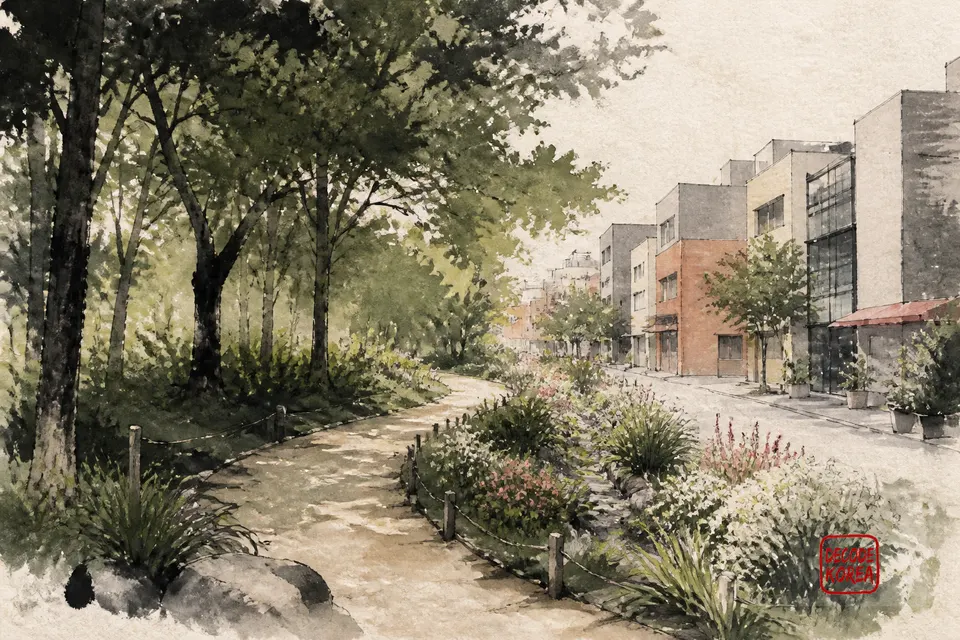
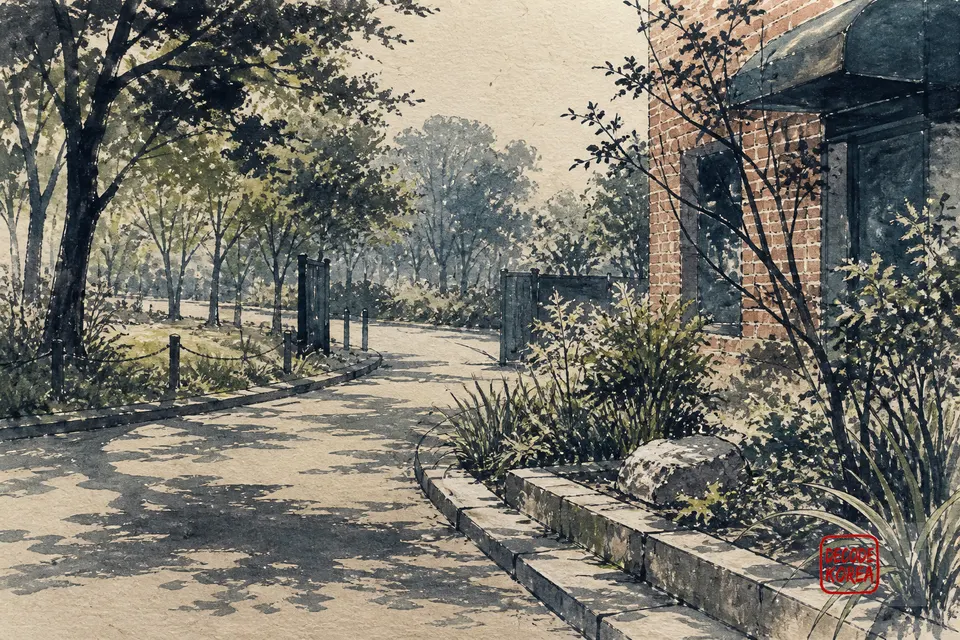
These original editorial paintings show the route as a change of pace, not a documentary map or a record of current event conditions.
1 / 2
Source: Seoul Metropolitan Government · 2026 Seoul International Garden Show · Seoul Metropolitan Government · Seoul Forest · Visit Seoul · Seoul Forest · YouTube · VisitSeoul TV · Cinematic Seoul: Seongsu-dong and Seoul Forest
Set a stopping point before you leave the park
A route becomes calmer when you decide in advance what counts as enough. For a park-first day, the stopping point might be the end of your chosen garden section. For a Seongsu continuation, it might be the moment the park gives way to the neighborhood edge. If you have not decided, every new path can feel like an obligation and the route loses the lightness that made the pairing appealing.
Use three questions at the transition: Do you still want a neighborhood walk? Is the current program or facility open as expected? Can everyone in your group continue at the same pace? A no to any one question is a good reason to stop, return to the planned exit, or save Seongsu for another day. The official sources support the places and the connection; they cannot predict your energy or the conditions in front of you.
An English VisitSeoul TV video offers visual orientation for Seongsu-dong and Seoul Forest as one setting. Watch it as a way to picture the relationship between the two areas, not as a current route map. Weather, maintenance, crowd levels, and event layers can change the view. The video is helpful because it gives the route a visual rhythm while leaving the operational claims to official sources.
 WATCH ON YOUTUBECinematic Seoul: Seongsu-dong and Seoul Forest
Open embedded player
Source: YouTube · VisitSeoul TV · Cinematic Seoul: Seongsu-dong and Seoul Forest
Make the live check part of the route
Before leaving, open the current Seoul International Garden Show notice and the official Seoul Forest information pages. Check the program layer first: what is running, where the linked areas are described, and whether a current notice changes the route. Then check the park layer: facility hours, closures, program conditions, and any detail that would make one space essential to your plan.
Keep your map search focused on Seoul Forest at 273 Ttukseom-ro, Seongdong-gu, rather than treating a broad Seongsu search as the destination. The map is an arrival tool, not evidence that a particular entrance, garden, or installation is open. Choose Seoul Forest Station or Ttukseom Station based on your route, and leave enough room for the final walk to change with the day.
The cleanest plan is therefore a small decision tree. Start with the park if you want the most controllable opening. Continue toward Seongsu only if the current notice and your group still support it. Stop after the park section if the live details are unclear. Seoul Forest and Seongsu can make a generous pair, but the best version is the one that keeps its promise small enough to keep.