
WAYS TO TRY IT
Choose your way in
Use the snapshot to choose a food ceiling before the drink menu changes the bill.
VISIT IN KOREA
Set the food spend before choosing liquor
Which two-person food shape fits the table?
- START HERE
- Compare the live price of one set with the subtotal of two separate plates.
- CHECK THIS
- Confirm item availability, current prices, hours, and drink stock through the live menu or official Instagram before committing.
Source: DiningCode · Sanullim 1992 · Sanullim 1992 · Official Instagram · VISITKOREA · Sanullim 1992
COOK AT HOME
Use the same two-column budget at home
How can you practice the food-versus-drink split without visiting the venue?
- START HERE
- Choose one crisp pancake-style dish and one tofu-or-kimchi contrast, then record food cost separately from any drink.
- CHECK THIS
- Treat this as a budgeting exercise, not a recreation of the restaurant menu or its portions.
Source: DiningCode · Sanullim 1992 · VISITKOREA · Sanullim 1992
RESTAURANT GUIDE
Sanullim 1992 (산울림1992)
Choose this follow-up when the practical question is how much food to commit to before opening the much more variable traditional-liquor menu.
- Address
- 60 Seogang-ro 9-gil, Mapo-gu, Seoul
- Food budget observed
- ₩44,000–₩50,000 for the three two-person examples in this guide
- Not included
- Traditional liquor, extra food, and any changed live price
- Hours
- Listings differ; verify the official channel on the day of the visit
- Last checked
- August 13, 2026
This is a dated menu-budget comparison, not a guarantee of current availability, total spend, service quality, or personal preference. Source: VISITKOREA · Sanullim 1992 · Sanullim 1992 · Official Instagram · NOL World · Sanullim 1992 · DiningCode · Sanullim 1992
GOOGLE MAPS
Open Sanullim 1992 in Google Maps
Sanullim 1992, 60 Seogang-ro 9-gil, Mapo-gu, Seoul
Check the live pin and directions before you leave.
OPEN IN GOOGLE MAPS ↗Start with the food subtotal, not an all-in estimate
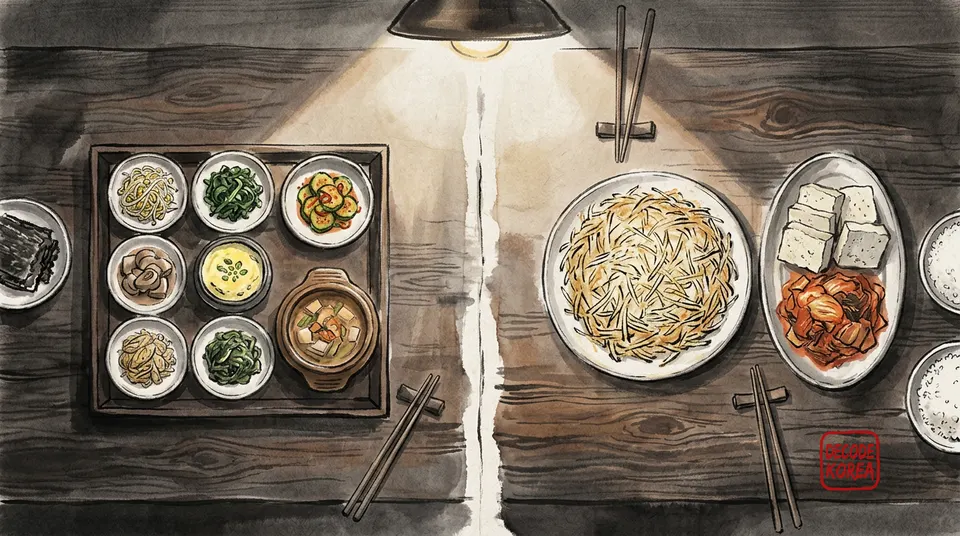
A useful budget for Sanullim 1992 begins with a narrow promise: what two people can document for food before choosing traditional liquor. On August 13, 2026, DiningCode displayed three practical shapes. The couple set was ₩44,000, Bansang No. 1 was ₩47,000, and a cheese potato pancake plus hand-tofu kimchi came to ₩50,000. Those numbers create a compact planning band, but they are not an all-in quote.
That distinction matters at a restaurant organized around a large liquor selection. VISITKOREA describes Sanullim 1992 as serving nearly 200 traditional liquors across makgeolli, refined rice wine, and distilled spirits. DiningCode's listing likewise shows categories with wide starting-price signals and individual bottles at different prices. Adding one guessed drink number would create false precision. The honest method is to lock the food decision first, then price the actual available bottle or glass at the table.
The snapshot also has an expiry condition. A publisher listing is documentary evidence of what was displayed when checked; it is not the restaurant's promise that every item, composition, or price will remain unchanged. Treat ₩44,000–₩50,000 as a dated comparison band for these specific food routes, not as a permanent label for the venue.
Route one: choose a set when you want one decision
The couple set is the lowest documented food subtotal in this comparison at ₩44,000. The listing describes four components: cheese potato pancake, spicy webfoot-octopus stir-fry, spicy chicken-feet pressed meat, and tomato pickle. For two diners, the value of this route is not merely that it costs ₩3,000 less than Bansang No. 1. It compresses several textures and flavors into one menu decision.
Bansang No. 1 costs ₩47,000 in the same snapshot. VISITKOREA identifies Bansang No. 1 through No. 5 as the restaurant's signature set format and says the numbers differ in composition and price. That makes the Bansang route useful when the composed-table format is part of why you are visiting. The couple set and Bansang are not interchangeable bundles, even though their documented prices sit close together.
Ask one question before ordering either: what exactly is included today? A set is economical only if its current composition suits both diners. If one person avoids a component or the live set has changed, the apparent convenience may disappear. Confirm the components and price, then choose the set for its table shape rather than assuming the lowest subtotal must be the best fit.
Route two: spend ₩50,000 on two legible plates
The two-plate route pairs the listed ₩26,000 cheese potato pancake with ₩24,000 hand-tofu kimchi. The arithmetic is simple: ₩50,000 for food before drinks. Compared with the couple set, that is ₩6,000 more; compared with Bansang No. 1, it is ₩3,000 more. The extra spend buys control over the two named dishes rather than a composed selection.
This route works when the diners want a clear contrast. The DiningCode descriptions present the pancake as finely shredded potato cooked crisp with olive oil, while the tofu-kimchi plate combines mild hand tofu with stir-fried kimchi and pork. One plate is organized around a browned, crisp surface; the other around soft tofu, seasoned kimchi, and meat. That contrast is an inference from the documented menu descriptions, not a first-hand tasting verdict.
Two plates can also be a worse choice. If the portions are larger than the table needs, the higher subtotal creates waste before any drink arrives. The sources do not provide reliable portion measurements for this calculation, so do not translate two listed dishes into a guarantee of fullness. Ask about portion size and whether both are available.
COMPARE THE BILL SHAPE
One set or two named plates
The useful comparison is the food commitment before the drink choice.
1 / 2
Keep the drink decision in a second column
Sanullim 1992's identity makes the drink budget consequential. The live listing displays broad liquor categories and selected bottles, but that does not mean the cheapest displayed category price will match the drink you want or what is in stock. A couple who chooses food at ₩44,000 has made only the first half of the spending decision.
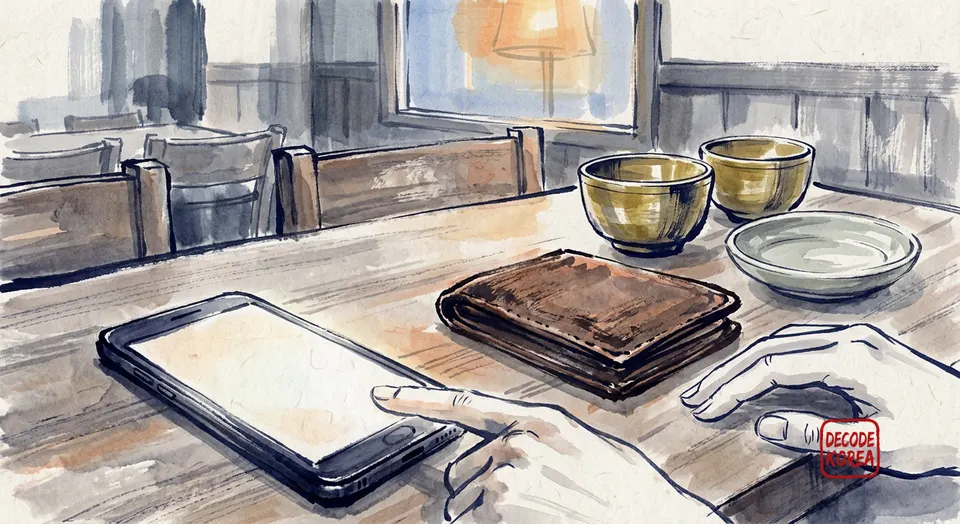
Use a two-column check. In the first column, write the confirmed food subtotal. In the second, add the exact live price of the bottle, glass, or nonalcoholic choice you are actually considering. Then decide whether another plate still fits. This prevents a broad category label from quietly becoming an assumed bottle price.
The official Instagram is the registered live channel for restaurant updates, although its public page was not retrievable in this check. That limitation is itself useful: verify through the live channel or at the venue rather than claiming a social post that could not be read. If the menu and the staff differ, use the current information at the restaurant.
Look closer
undefined
undefined
- 01
Food
Keep the dated set or plate subtotal visible.
- 02
Drink
Add only the current bottle, glass, or nonalcoholic price you can verify.
- 03
Tradeoff
Decide whether another plate still makes sense after the drink choice.
Check the volatile details before leaving
The stable location signal is strong. VISITKOREA, NOL World, and DiningCode all identify the venue at 60 Seogang-ro 9-gil in Mapo-gu. The Google Maps link in this guide uses that name-and-address query. Still, a map match does not verify that the restaurant is open at the moment you travel.
Hours are less stable. VISITKOREA publishes a weekly schedule with Monday closed, while DiningCode displayed its own current-day schedule during the August 13 check; NOL's accessible page did not expose a complete schedule. Rather than selecting one listing as permanently correct, check the restaurant's official channel and a current map or listing on the day of the visit.
Run the same check for the three facts that drive this budget: current set composition, current item price, and actual availability. Save the dated snapshot as a planning reference, not evidence to argue with a changed menu. A budget guide remains useful only when it tells you where its certainty ends.
Look closer
undefined
undefined
- 01
1. Anchor
Confirm the current food set or named plates and write the subtotal.
- 02
2. Verify
Check current availability, hours, and the exact drink option before adding it.
- 03
3. Decide
Choose the table shape that still fits after the live details are known.
The two-person decision in one minute
Choose the ₩44,000 couple-set route if its live components suit both diners and you want one compact decision. Choose the ₩47,000 Bansang No. 1 route if the restaurant's signature composed format is the point of the meal. Choose the ₩50,000 two-plate route if you specifically want the potato pancake and tofu kimchi and accept the higher food subtotal.
Before ordering, repeat the arithmetic from the live menu. Keep drinks outside the food subtotal until you have an exact available option and price. Ask about portions before adding more food. None of these steps requires a claim that one dish is objectively best; they simply make the tradeoff visible.
The final planning number is therefore a range with a date and a boundary: ₩44,000–₩50,000 for the three documented food shapes observed August 13, 2026, excluding drinks and changes. Confirm it on the day, choose the table shape first, and let the actual liquor selection determine the rest of the bill.