
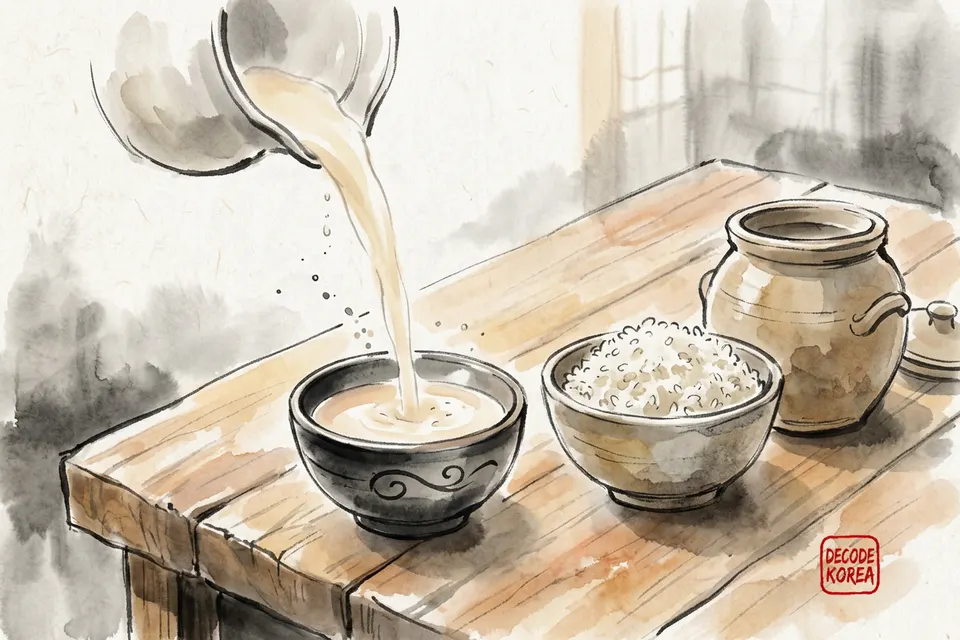
WAYS TO TRY IT
Choose your way in
Start with the route that fits the way you want to experience the dish.
VISIT IN KOREA
Try the original context
What should you notice when you encounter this food in Korea?
- START HERE
- Use the article's menu or serving clues as your starting point.
- CHECK THIS
- Notice the dish name, serving format, and the detail that changes the experience.
Source: 한국민족문화대백과사전 · 막걸리 (Makgeolli) · 한국민족문화대백과사전 · 막걸리 빚기 (Makgeolli Brewing)
COOK AT HOME
Take the idea home
What part of the food can you try without reproducing a restaurant?
- START HERE
- Start with the ingredient or technique described in the article.
- CHECK THIS
- Treat substitutions as an adaptation and keep the source-backed structure intact.
Source: 한국민족문화대백과사전 · 막걸리 (Makgeolli) · 한국민족문화대백과사전 · 막걸리 빚기 (Makgeolli Brewing)
The short answer: makgeolli is fermented grain left cloudy
Makgeolli is a traditional Korean alcoholic drink made by fermenting rice or another grain with water and nuruk, a fermentation starter. The Korean Studies Encyclopedia defines it as a drink made by filtering the fermented mash without first drawing off the clear liquor. That is the practical reason the drink arrives pale, opaque, and softly textured rather than crystal clear.
In English, makgeolli is often called rice wine or rice beer. Both labels point in the right direction, but neither explains the drink completely. The grain base suggests rice wine; the low, gently lively style can recall beer. The Korean name is more useful than either comparison because it keeps the focus on the making method: a drink filtered just after fermentation rather than polished into clarity.
Why is makgeolli cloudy? The answer is in the filtering
A typical brew begins with cooked rice, water, and nuruk. After fermentation, the mash is pressed or filtered. The goal is not to remove every trace of the grain. Fine particles remain suspended in the liquid, creating the familiar white-to-ivory appearance and a fuller impression in the mouth. The Korean Studies Encyclopedia describes the result as a cloudy drink in which the rice grains have broken down during filtering.
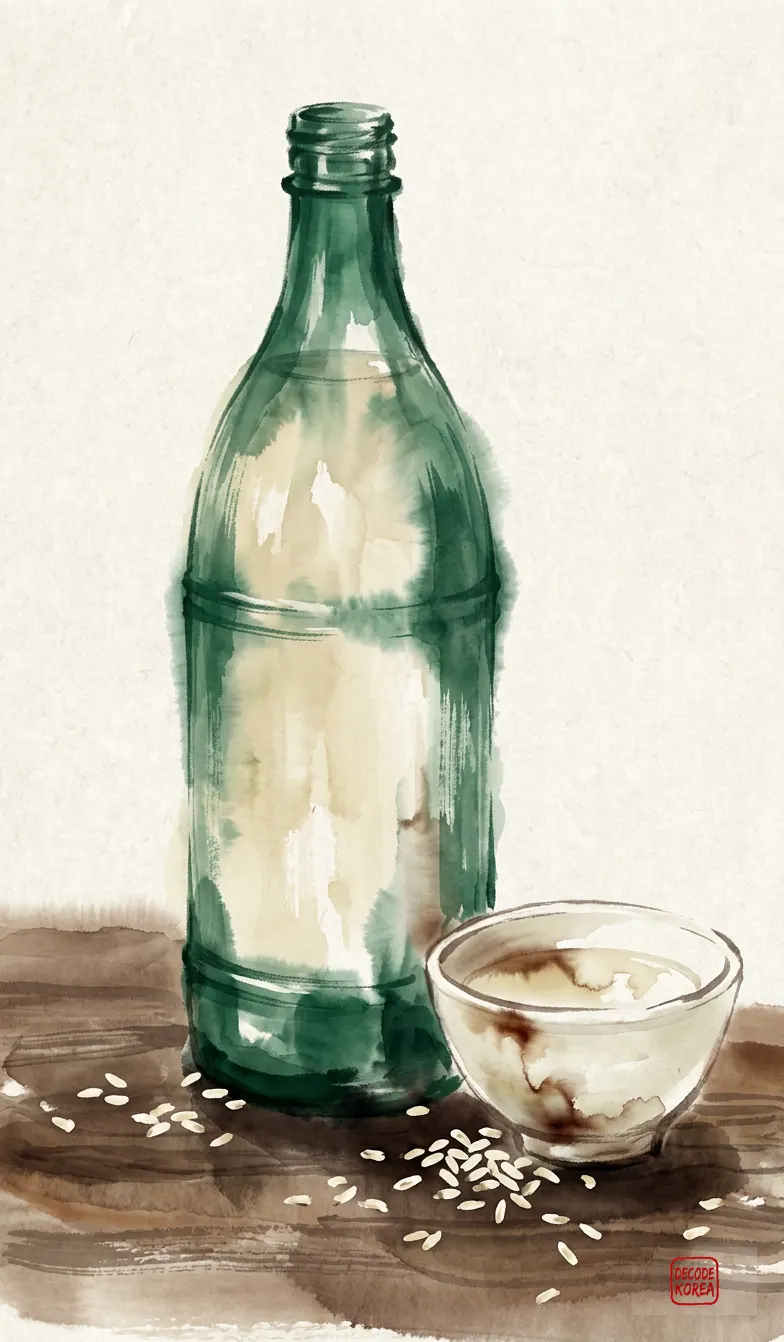
That also explains why a bottle can look different after it has rested. Sediment may settle toward the bottom, leaving a paler layer above it. Gentle movement can bring the mixture back together, but the label’s instructions should take priority. What looks like a defect is often part of the drink’s identity: makgeolli is meant to show more of its fermented base than a refined clear rice wine does.
HOW MAKGEOLLI BECOMES CLOUDY
Four steps, one unmistakable glass
The visual difference between makgeolli and clear rice wine starts before the drink reaches the table.
- 01
Cook 찌다
Steam or cook the grain so its starch is ready for fermentation.
- 02
Combine 섞다
Mix the grain with water and nuruk, the traditional fermentation starter.
- 03
Ferment 발효하다
Let the mash develop alcohol, aroma, and acidity over several days.
- 04
Filter 거르다
Strain the fermented mash while keeping fine grain particles in the drink.
Source: 한국민족문화대백과사전 · 막걸리 (Makgeolli) · Korea.net · Makgeolli Making and Sharing Designated as National Intangible Cultural Heritage
Nuruk is not just yeast in a packet
Nuruk is a Korean fermentation starter made from grain and cultivated microorganisms. It contributes enzymes that break down starches and also supplies microorganisms involved in fermentation. That is why the source material matters: rice provides the starch, water creates the medium, and nuruk helps turn the grain into something drinkable and aromatic.
The exact character of a makgeolli depends on the grain, the water, the nuruk, the fermentation conditions, and the brewer’s choices. The National Intangible Heritage description summarizes the conventional sequence as cooking rice, combining it with water and nuruk, fermenting the mash for several days, and filtering it through a sieve. The sequence is simple to state; the flavor differences come from the decisions inside each step.
Makgeolli is one category within Korean traditional liquor
If a Korean menu lists makgeolli beside yakju or soju, the difference is not simply a matter of color. Korea’s current K-Sool classification describes makgeolli as traditional unfiltered, cloudy rice wine; yakju and cheongju are refined clear rice wines; fruit wine and distilled spirits form other categories. The distinction begins with how the fermented liquid is treated, not with a marketing adjective.
This gives first-time drinkers a better way to read a menu. Ask whether the drink is cloudy and unfiltered, clear and refined, or distilled. A bottle with fruit, herbs, or carbonation may be a contemporary interpretation, but it still becomes easier to understand once you know which traditional family it is building from.
Fresh and unpasteurized bottles need more attention
Not every makgeolli bottle behaves the same way. Korea.net’s coverage of award-winning local liquors notes that unpasteurized makgeolli has a short expiry period because it has not been sterilized. That is useful information when shopping outside Korea: check the producer’s storage instructions, date markings, and whether the bottle needs refrigeration before you buy it.
The bottle can also continue to change as it rests. Carbonation, sediment, and sweetness may shift, so open it carefully and follow the producer’s directions. This is not a reason to treat every cloudy bottle as a living laboratory. It is a reason to read the label instead of assuming that all makgeolli is shelf-stable or interchangeable.
SEE THE DISH
Cloudy is only the first clue
Color, sediment, bottle handling, and food pairing all help you understand what is in the glass.
1 / 2
How to try makgeolli for the first time
Start with a chilled bottle from a producer who explains the style clearly. Pour a small amount into a bowl or glass, look for the balance between liquid and sediment, and taste it with food rather than treating it like a shot. Korean drinking culture has long placed the drink beside a meal or a shared table, and modern K-Sool guides increasingly present traditional alcohol with food pairings.
For a first comparison, try one clean, lightly sweet bottle and one more assertive or seasonal style. Pay attention to acidity, rice aroma, texture, and the finish. The point is not to find the single ‘authentic’ flavor. Makgeolli is a method and a culture with room for regional ingredients and contemporary brewing choices.
The drink carries a social practice with it
In 2021, makgeolli making and sharing was designated a National Intangible Cultural Heritage of Korea. The designation covers more than a recipe. It recognizes a living practice that includes brewing knowledge and the way the drink is shared, connecting household foodways, seasonal occasions, and local identity.
That is the part a one-line translation misses. Makgeolli is not interesting only because it is cloudy or because it is becoming easier to find abroad. It is a direct example of how a Korean food tradition can remain recognizable while its ingredients, packaging, and serving contexts keep changing.