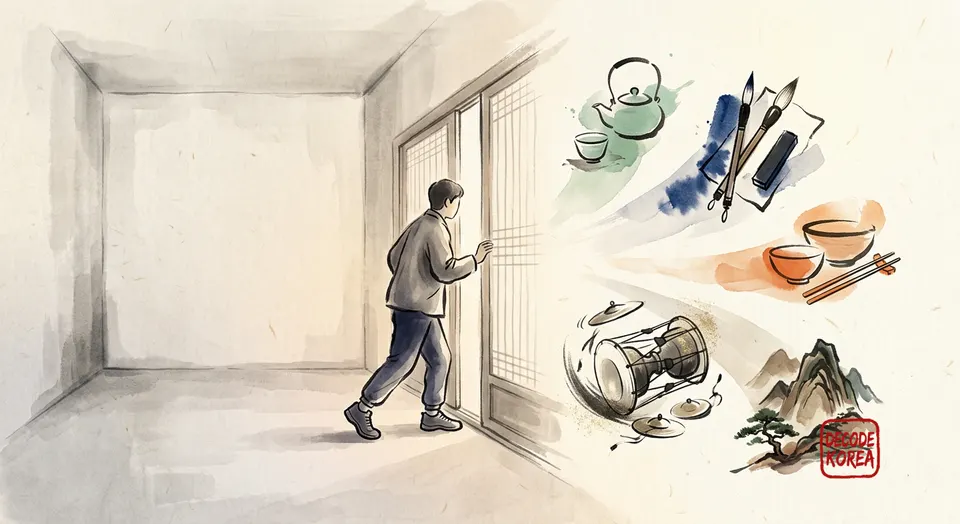
Two formats do two different jobs
The useful contrast is depth versus breadth. KOREA's August 2026 cover story says travel has shifted beyond famous sights toward stays that expose everyday life, local communities, and personalized experience. It describes Korean hotels as spaces that combine dining, wellness, design, art, and local content, and it also discusses hanok stays and the countryside-oriented idea of choncance.
The Discover Korea Festival page has a different purpose. The KTO Sydney office advertised a free event at Circular Quay on August 15, 2026, from 10 a.m. to 8 p.m. Its program grouped travel planning, airlines, hands-on cultural activities, K-beauty, food tastings, and stage entertainment into one day.
That contrast does not make one format more authentic. It tells you what each can reasonably deliver. Time inside a stay can turn small routines into the subject. A festival reduces the commitment required for a first encounter and lets you scan several interests quickly.
Read a stay for depth, not completeness
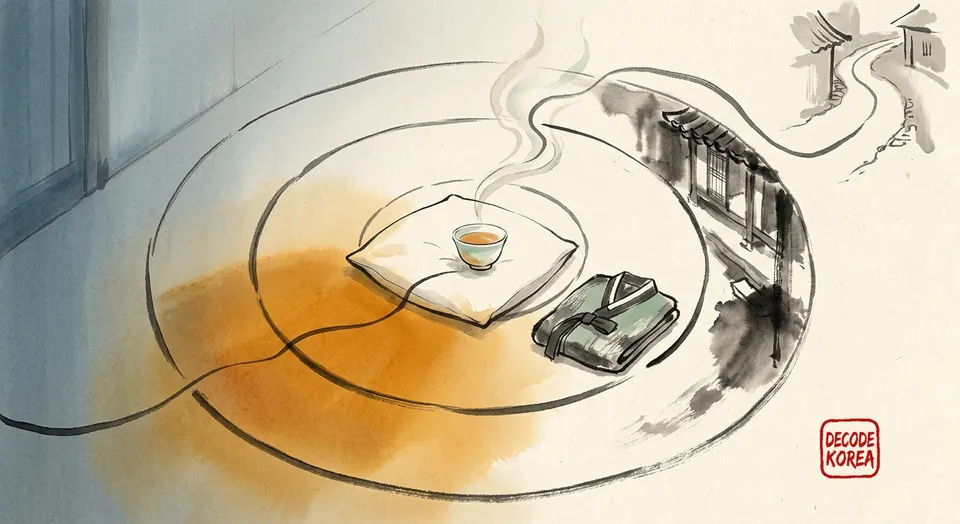
The KOREA article's strongest idea is that lodging can become the destination rather than a neutral base. It explains hocance as more than sleeping at a hotel and presents hotel dining, wellness, design, and seasonal experiences as part of urban lifestyle culture. It also treats hanok stays as encounters with ordinary actions such as sitting on an ondol floor, drinking tea, crossing a courtyard, and walking a neighborhood lane.
Those examples show why duration matters. Repeated transitions—waking, eating, resting, walking, returning—can reveal how a place organizes time and attention. But an official magazine frame cannot tell you whether a particular property is well run, whether local residents benefit, or whether your experience will resemble the examples.
Use a stay when you already know which routine or setting you want to spend time with. Then check the current property, neighborhood rules, accessibility, transport, and independent reviews separately.
Use a sampler as an interest filter
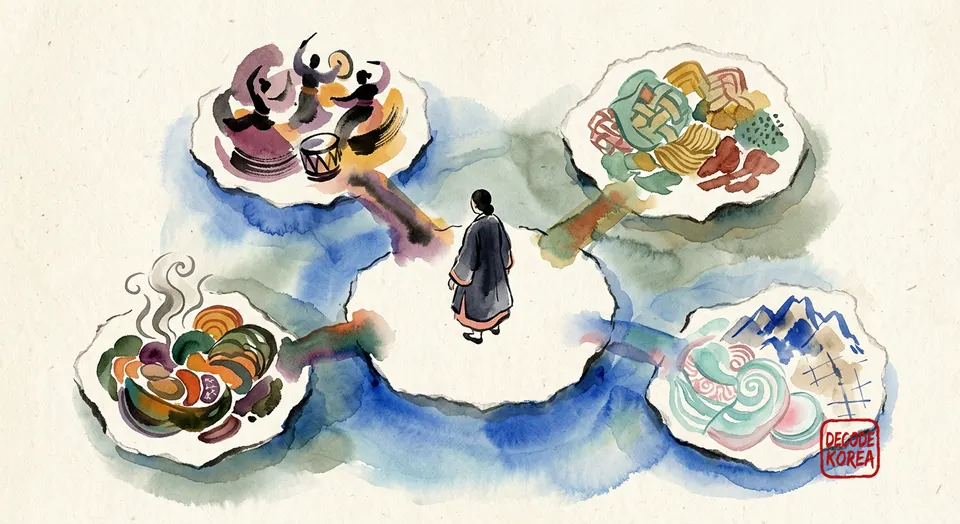
The Sydney festival page openly organizes breadth. It invited visitors to meet tour partners and airline representatives, try cultural activities and crafts, explore K-beauty, taste food, and watch performances and talks. That design is useful when you do not yet know which part of Korea you want to explore further.
A sampler can answer a narrow question: what held your attention long enough to deserve a second step? It cannot show how that subject works across regions, generations, workplaces, homes, or ordinary weeks in Korea. Nor does an exhibitor list provide an independent judgment about the brands or travel products present.
Leave a sampler with one follow-up question rather than a claim that you now understand Korean culture. If craft drew you in, identify the specific craft and its makers. If food did, identify the dish and regional context. If travel did, compare current local and independent sources before booking.
DEPTH OR BREADTH
Routine layers and sampler islands
These original illustrations explain the comparison; they do not depict a named property or the Sydney event.
1 / 2
Source: Webzine KOREA · Korea’s Hospitality Today, Read Through Global Trends · VISITKOREA · You’re invited to the 2026 Discover Korea Festival!
Choose your next layer
Choose breadth first when curiosity is still general. A well-labeled one-day program can help you sort travel, craft, beauty, food, and performance into a smaller shortlist. Choose depth when you can name the routine, place, or practice you want to spend time inside.
Then add a third layer: verification. The two experience pages come from official Korean culture or tourism channels. They are strong evidence for what their publishers presented, but they are not independent reviews. Confirm current operations with the organizer or property and use independent reporting or local expertise for impact, quality, and contested claims.
The approved Arirang News record identifies an English video titled ‘[FULL] K-Culture Dive (2026-08-06),’ published August 6, 2026. Because the stored record is description-only, it is used here only as a current Korea-based English culture signal—not as evidence about the video's segments, guests, or conclusions.
Your decision rule is simple: sample to find the question; stay longer to observe a narrower context; verify before turning either experience into a general statement about Korea.
 WATCH ON YOUTUBE[FULL] K-Culture Dive (2026-08-06)
Open embedded player
Source: YouTube · Arirang News · [FULL] K-Culture Dive (2026-08-06)
THREE LAYERS
Sample, deepen, verify
Move from orientation to context without turning one experience into a universal claim.
- 01
Sample
Use a broad program to identify one durable interest.
- 02
Deepen
Spend time with a narrower routine, place, or practice.
- 03
Verify
Check current official details and independent context before generalizing.
Source: Webzine KOREA · Korea’s Hospitality Today, Read Through Global Trends · VISITKOREA · You’re invited to the 2026 Discover Korea Festival!