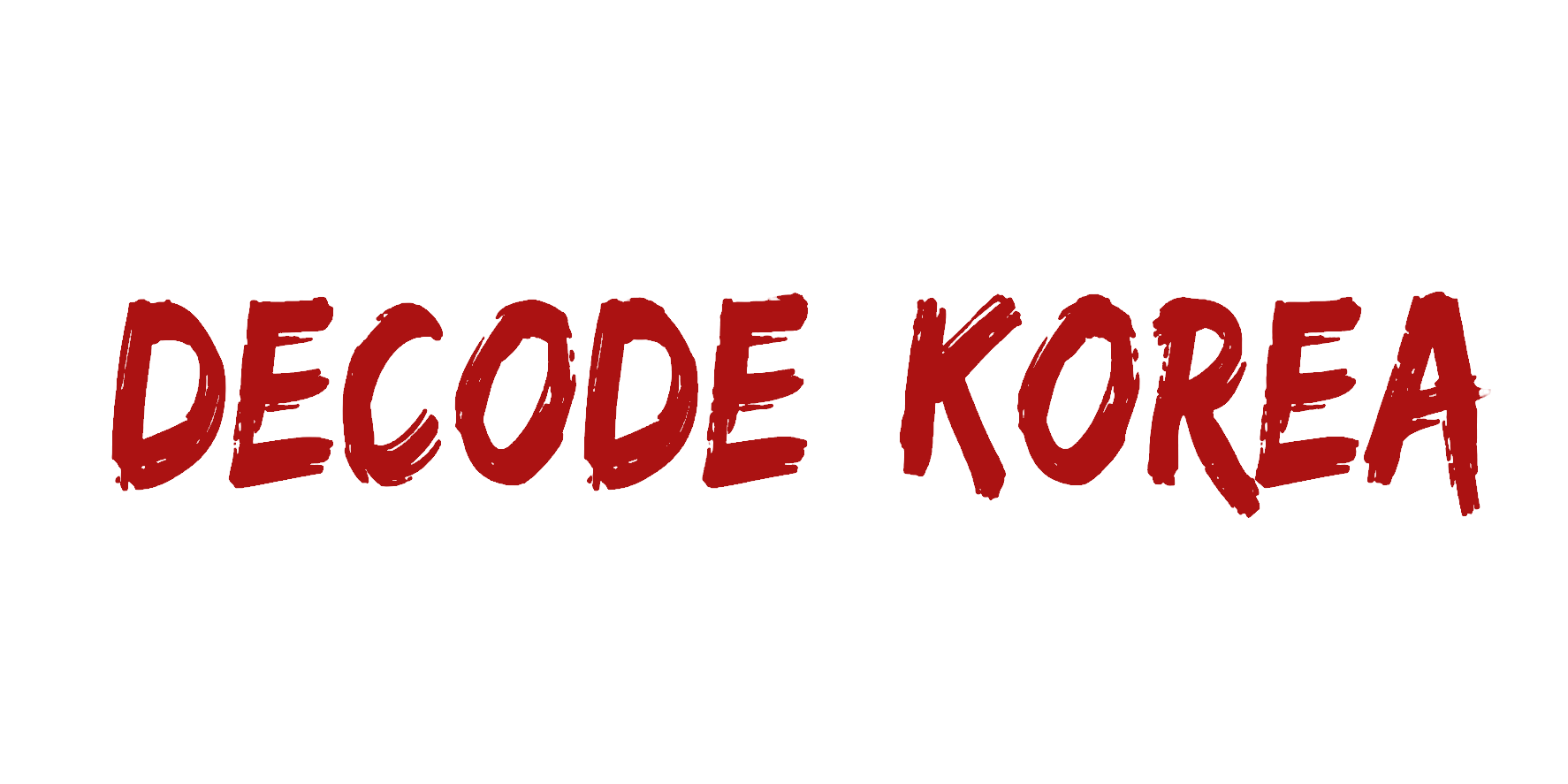
Read the program as a map
KCCNY's official page makes the breadth visible. Its umbrella program brings Korean entertainment, gaming, food, beauty, tourism, and fandom together through installations, media experiences, hands-on activities, and self-guided spaces. That range is not a flaw. It gives a newcomer several low-commitment entry points in one place.
But a map is not the territory. The categories have been selected, grouped, and staged by organizers for an overseas audience. They show what this program chose to make legible in New York; they do not prove that the same bundle defines Korean culture or everyday summer life.
Use the map to notice where your attention slows down. The most useful outcome is not ‘I experienced Korea.’ It is a narrower sentence such as ‘I want to understand why PC bangs work as social spaces’ or ‘I want to learn how Korean summer horror programming uses folklore.’
Separate the standing exhibition from special activations
The KCCNY page draws an important operational line. It says the exhibition remains available as a self-guided experience, while K-beauty experiences and food sampling happen only on selected activation days. That means two visitors can attend the same umbrella program and encounter different layers.
The page also gives its zones different calendars. The PC Bang and Snack Zone is listed for July 8 through August 22, while the horror screening series runs August 6 through 21 with four named films. The beauty and tourism zone has its own date ranges, and the BTS fan program occupied August 1 through 3.
Before attending any curated program, ask three separate questions: what is continuously installed, what happens only at set times, and what depends on limited samples or capacity? That reading habit prevents a headline from becoming a promise about your particular visit.
Turn one zone into a better question
A themed zone compresses context so you can enter quickly. KCCNY describes its PC bang recreation through games, friends, ramyun, snacks, and time spent together. That supports a question about social space. It does not establish how every PC bang operates, who uses one, or how the experience differs by neighborhood, age, or hour.
The same rule applies to beauty, tourism, film, and fandom. A product trial can introduce a category without proving an everyday routine. A destination screen can spark travel interest without replacing current local reporting. A screening series can show curatorial range without summarizing Korean horror as a whole.
Write down one thing the zone shows and one thing it cannot show. Then make the missing part your next query. This turns curation into a research handoff instead of a generalization.
SAMPLER TO QUESTION
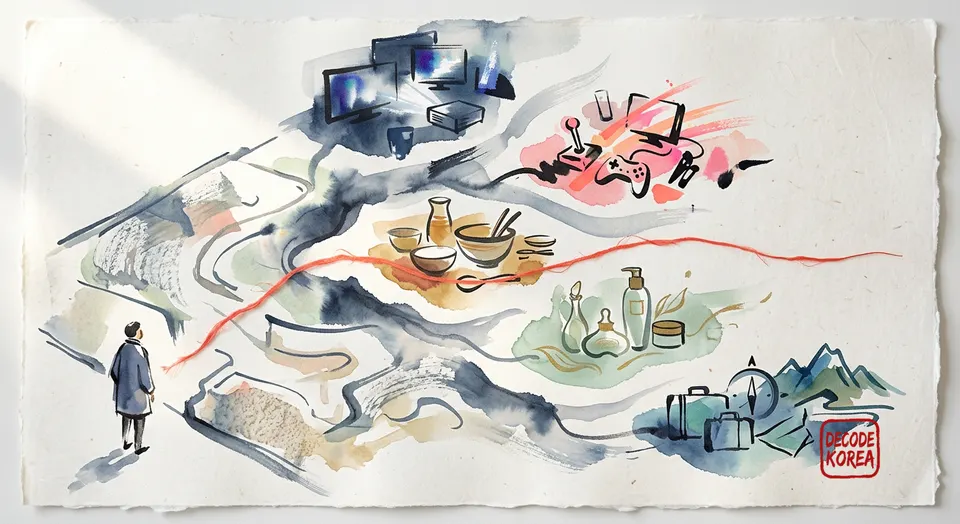
Breadth opens doors; focus chooses one
These original illustrations explain the reading method and do not depict either named event.
1 / 2
Source: Korean Cultural Center New York · It’s Time for K-Culture 2026: Escape the Summer, Dive into Korea · YouTube · Asian Festival · Atlanta Korean Cultural Center 2026
Keep thin evidence small
The Korean Cultural Centre UK record is titled ‘[K-Music Festival 2026] Korean Games in Concert’ and was published on July 31, 2026. Its stored description-only status supports that narrow title-and-publisher observation: a broad festival frame can also narrow to a specific pairing of games and music. It does not support claims about the performance itself or its reception.
The Atlanta record is titled ‘Asian Festival · Atlanta Korean Cultural Center 2026’ and was published on August 9, 2026. Because that stored evidence is also description-only, this article uses it only as a current signal that another Korean Cultural Center context appeared in a festival video record.
It is not evidence for the Atlanta event's program, size, audience response, or cultural meaning. A title can confirm that a video object exists; it cannot carry claims hidden beyond the evidence packet.
This distinction matters whenever festival coverage looks plentiful. More links do not automatically mean more verified context. Give each source only the work it can actually do.
 WATCH ON YOUTUBEKorean Games in Concert
Open embedded player
Source: YouTube · Korean Cultural Centre UK · [K-Music Festival 2026] Korean Games in Concert
Choose the next layer
After the sampler, move one level closer to the subject. For gaming, look for Korea-based reporting or scholarship on PC bangs as businesses and social spaces. For food, identify the dish before looking for regional and everyday context. For film, follow the specific title, director, genre, or folkloric reference rather than the umbrella label ‘K-horror.’
Then compare an institutional source with an independent or expert source. Cultural centers are strong evidence for what they scheduled and how they framed it. They are not independent reviews of their own programs, nor surveys of how representative a selected activity is.
The decision rule is simple: use breadth to find the door, use a precise question to step through it, and use locally grounded evidence before making a claim about Korea.
THREE LAYERS
Sample, question, contextualize
Move from curated breadth toward claims that match the evidence.
- 01
Sample
Notice which zone or category holds your attention.
- 02
Question
Name one thing the zone shows and one thing it cannot show.
- 03
Contextualize
Use Korea-based official, expert, and independent sources before generalizing.
Source: Korean Cultural Center New York · It’s Time for K-Culture 2026: Escape the Summer, Dive into Korea · YouTube · Asian Festival · Atlanta Korean Cultural Center 2026