
One headline, three different programs
Why does "Korea is expanding overseas Korean classes" show up so often in 2026? Because it isn't one program — it's three separate ones running at the same time, each expanding a different part of the system. The Ministry of Education is sending more teachers. The Ministry is also building new textbooks. And the King Sejong Institute Foundation, a separate body, is opening new institute locations after a record year of applications.
Reading all three as one undifferentiated "expansion" story is where most readers go wrong. Each program answers a different question: who is teaching, what they are teaching from, and where a new institute physically exists. None of the three, on its own, tells you whether any of that reaches your specific city.
What's actually expanding: teachers, textbooks, and institutes
On the teacher side, the Ministry of Education announced it would dispatch 93 Korean language teachers to more than 200 schools across 13 countries in 2026. That builds on a longer program: starting with Thailand in 2011, a total of 1,024 Korean language teachers have been dispatched to 21 countries through last year. The 2026 round is prioritizing early-career teachers with under three years of experience, and in at least one case — Uzbekistan — the host government is providing supplemental allowances under a special arrangement.
On the materials side, the Ministry is developing nine new educational materials in 2026, including a Korean-language supplementary textbook built around BTS content. The Ministry has published BTS-themed textbooks since 2021, reaching eight volumes to date, and the new 2026 materials will add AI-integrated learning support functions. A companion textbook uses K-drama scenes to teach everyday Korean culture rather than only vocabulary.
On the institute side, the King Sejong Institute Foundation approved 29 new institute locations across 23 countries, drawn from 102 applicant organizations across 45 countries — the highest application volume the foundation has logged in five years. Three of the new locations establish a King Sejong Institute in a country for the first time: Greece, Rwanda, and Sri Lanka. Seoul National University is joining the network as a partner institution for the first time as well.
Why demand is rising — and why that isn't proof either
The enrollment number behind this expansion is real: King Sejong Institutes reported total 2025 enrollment of 239,020 students across online and offline programs, an all-time high. Combined with a five-year record in institute applications, that is a genuine signal that global interest in learning Korean is climbing, not a marketing claim.
But a rising national total is still a national total. It tells you that Korea is responding to broad demand with more teachers, more materials, and more institutes somewhere in the world. It does not tell you that any one of those additions landed in your country, city, or school district this year. The K-wave interest driving the demand is genuinely global; the actual classroom seats are allocated country by country and often school by school.
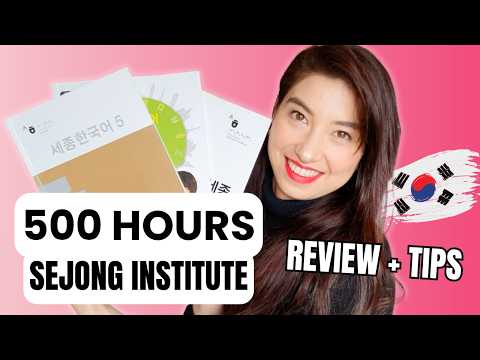 WATCH ON YOUTUBESejong Institute Review — 500 Hours of Korean Classes Later
Open embedded player
Source: kimincoree · Sejong Institute Review — 500 Hours of Korean Classes Later
Check what's actually near you
To move from the national story to your local answer, go to the source, not the headline. For an institute-based class, check the King Sejong Institute Foundation's own location directory for a center in your country or a nearby one — the 2026 additions are specific named institutions, not a general expansion you can assume into. For a teacher-dispatch program tied to a school, that assignment runs through your local school system or a Korean cultural center or embassy, not a public enrollment page you can browse directly.
Because these programs are competitive and location-specific — remember, 102 organizations applied for only 29 new institute slots — availability changes year to year. Confirm the current year's location list, application or enrollment window, and any eligibility requirements directly on the institute or embassy's own page before you build a plan around a class that may not yet exist where you are.