Read the head noun before the prestige word
A page can be official, current, and useful without answering the question you have. The Korean Cultural Center Belgium record is a registration notice for 2026/2027 Korean language courses. The Ministry of Education record describes a learner-support platform. The National Institute of Korean Language record announces an individual qualification review for Korean-language teachers.
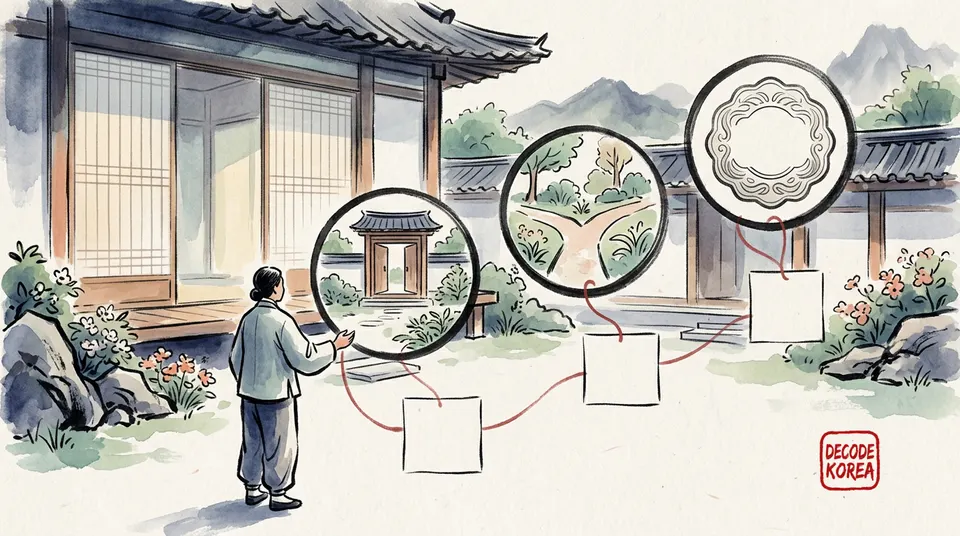
The practical reading move is to find the head noun first. 수업 means the class or lesson you would attend. 학습 지원 means support for learning. 교원 자격 means a teacher qualification. Words such as official, AI-powered, or certified may attract attention, but the head noun tells you what kind of evidence the page can actually supply.

Source: Korean Cultural Center Belgium · Registration for 2026/2027 Korean Language Courses · Ministry of Education · AI-Powered Korean Language Learning Platform Captures the Authentic Voices of Migrant Students · 국립국어원 한국어교원 자격 · 2026년 제2차 한국어교원 자격 부여(개인 자격 심사) 계획 공고
Layer one: verify the course you can actually attend
The Brussels source supports a narrow fact: the Korean Cultural Center published a registration notice for its 2026/2027 Korean language courses. That makes it course-layer evidence. It does not, by itself, establish that the course fits your level, schedule, location, budget, or learning goal.
On the live provider page, write down the named audience, dates, delivery mode, registration path, and any current eligibility or completion rules. If a condition that would change your decision is missing or stale, ask the provider. Do not fill the gap with the institution's reputation.
Layer two: ask what the learning support does and for whom
The Ministry of Education says Korean for Everyone is designed for students with migrant backgrounds to use at home and at school. Its documented services include Korean proficiency diagnostics, personalized progress management, and level-specific learning content. The July 2026 release also announces a first Student Advisory Board: 22 teams, about 60 students from 15 countries of origin, and 22 coordinating teachers serving through December 2026.
That is evidence about the platform's intended users, stated functions, and feedback process. It is not a general review of every AI Korean-learning product, and it does not prove how you would learn on a different platform. Treat a feature list as a support check: Can you access it? Does it serve learners like you? Does it address a task you need? What outcome remains unverified?
Layer three: keep teacher qualification separate from student fit
The NIKL record is titled as the plan for the second 2026 grant of Korean-language-teacher qualifications through individual qualification review. The page places the notice under 개인 자격 심사, or individual qualification review, and provides application and result-check paths. This is evidence about a formal teacher-qualification process.
It is not a student course listing, and it does not rate a particular teacher or school. If a provider mentions qualified teachers, ask which credential it means, whether the claim applies to the instructor you would have, and what evidence the provider shows. A real credential can be relevant without answering questions about curriculum, classroom fit, or learner support.
Make one three-column evidence card
Create three columns labeled 수업, 학습 지원, and 교원 자격. Put each fact in only the column it directly supports. A registration year belongs under course. Diagnostics and learner feedback belong under support. An individual credential review belongs under qualification. A blank cell is an unanswered question, not proof that the program lacks that feature.
The three official records agree that Korean-language education involves institutions, tools, and professional processes, but they contrast in audience and purpose. That gap is the point: no single source proves the whole program. Before enrolling, require course-layer evidence for attendance, support-layer evidence for the help you will use, and credential-layer evidence for any teacher claim that matters to your decision.
 WATCH ON YOUTUBEKU KLC: Everything You Need to Know About a Language Course in Korea
Open embedded player
Source: YouTube · Genesia Synclaire · KU KLC: Everything You Need to Know About a Language Course in Korea