Put the release at the center of the update
When a K-pop story contains both a new song and a concert notice, the headline can drift toward logistics. That is the wrong order for this STAYC update. The current artist-news question is what 2 L0VE adds to the group’s public timeline. High Up’s approved records and the official 2 L0VE video give the release its primary evidence. The Seoul notices matter because they show where the group’s current cycle meets a domestic stage, but they are context around the artist update rather than a replacement for it.
That distinction is useful for readers who encounter the story through a search result, a video thumbnail, or a concert announcement. A release tells you what the artist is putting into the public record now. A performance notice tells you where and when an audience may encounter the group. The two can reinforce each other without saying the same thing. Keeping them separate makes the news easier to update when a new official notice appears.
Read the release record before the schedule
Start with the artist-linked release record and the official video. The useful question is not whether a video feels like a comeback announcement in the abstract; it is what the approved record actually identifies as 2 L0VE. Use the title, artist, and release context that the source provides. Do not turn the visual mood of a music video into a claim about choreography, promotions, or a future set list unless another approved source makes that claim.
High Up’s artist profile supplies identity context, not a substitute for a current event notice. That is an important source boundary. A profile can establish who STAYC is and help resolve the entity in a search result. It cannot, by itself, confirm a new date, ticket window, guest appearance, or production detail. The strongest update uses each source for the job it can actually do: release source for the music, official notice for the event, profile for identity, and reporting for bounded background.
Use the Seoul notices as the second layer
The STAY CLOSER Seoul notice and its detailed notice give the domestic story a practical second layer. They help a reader see that the release cycle is not floating without a local event context. Korea JoongAng Daily adds reporting context around the fan-concert tour, while the official notices remain the stronger place to check details that can change. This is a hierarchy, not a pile of interchangeable links.
For a reader planning to follow the story from Korea, that hierarchy answers two different needs. You can ask what STAYC released, then ask what the Seoul schedule currently says. If you reverse those questions, the article starts to sound like a ticket guide and the musician disappears. The point of a K-pop news page is to keep the artist and the current update visible even when event logistics are the most clickable part of the story.
The safe phrasing is therefore deliberately modest: the release is confirmed by the release record; the Seoul show is confirmed by the official notice; anything beyond those records remains pending. That wording protects the reader from a common entertainment-news error, in which older tour context is mistaken for a newly announced detail.
What this update does not prove
A release update does not prove the final concert set list. A Seoul notice does not automatically confirm every promotion connected to the song. A reporting article about a tour does not replace the official event record when the question is ticketing, entry, venue operations, or a date change. These are not evasions; they are the boundaries that keep a fast-moving artist story accurate.
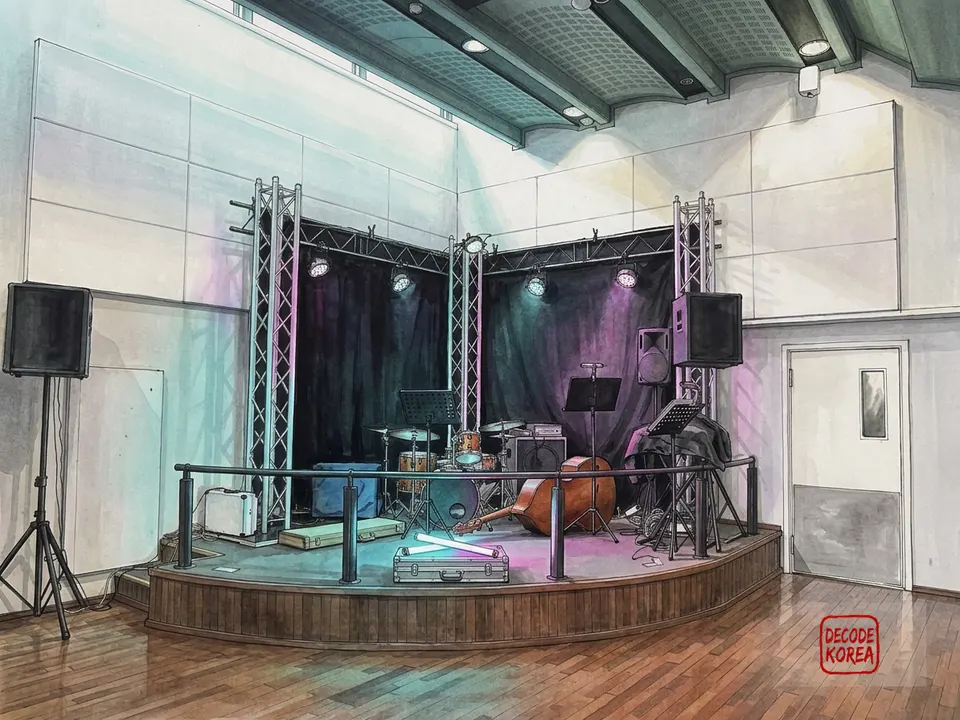
The same rule applies to visuals. The article’s ink-wash images are contextual illustrations, not photographs of STAYC, the 2 L0VE release, or a verified Seoul appearance. They can help organize the relationship between music, stage, and audience, but they cannot prove what happened. If a later article needs a real musician photograph, it must use the separate licensed-photo workflow with rights and credit metadata.
The next useful check is another artist update
The best follow-up is not a guess about what STAYC will do next. It is another source check. Look for a new High Up notice, a revised Weverse event record, or a clearly dated report that adds a specific release, appearance, or schedule change. Keep 2 L0VE as the music anchor and the Seoul notices as the domestic event layer. That structure makes a later update easy to compare with this snapshot.
For now, the story is clear enough to follow: STAYC has a release-led update, and the Seoul concert notices provide the local stage context around it. Read the music first, verify the event second, and leave unannounced details blank. That is how a current K-pop article can stay useful after the first wave of excitement has moved on.
That approach also respects the pace of domestic entertainment news. A new notice can change the practical layer without rewriting the release record, and a later music update can be added without pretending that an older concert announcement is current. The article remains a snapshot with a clear handoff to the next source check.